• Skip to primary navigation
  • Skip to main content
  • Texas A&M Forest Service
  • Texas A&M Veterinary Medical Diagnostics Laboratory
  • Texas A&M AgriLife Extension Service
  • Texas A&M AgriLife Research
  • Texas A&M College of Agrculture and Life Sciences
Working on Wellness Environments
Working on Wellness Environments (WOW-E) is a Texas A&M AgriLife Extension multidisciplinary community development program
  • Menu
  • Home
  • About
    • What is WOW-E
    • Meet the Team
    • Our PSE Approach
    • The HOP Program
    • HOP Counties
  • Stories
    • Blog
    • Videos
  • Resources
  • Technical Assistance
    • WOW-E Technical Assistance Process
    • WOW-E FY 2027 Technical Assistance Cycle
  • Become a WOW-E Community

Empowering Youth Voices and Communities through Change: Highlights from the WOW-E 2026 Summit 

September 22, 2026 by kelsey.coats

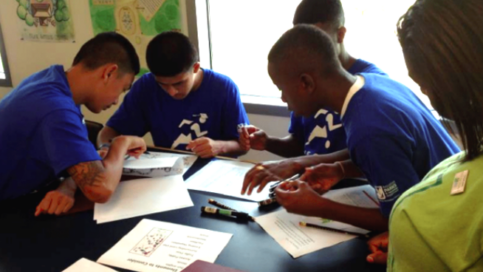
Over two days, 22 participants representing Texas A&M AgriLife Extension, PVAMU Extension, the Boys & Girls Club of Deep East Texas, 4-H, local government, and the Master Wellness Volunteer program gathered for the Engaging Youth in Designing Healthier Communities Summit to explore evidence-based strategies for building healthier communities through youth engagement, empowerment, and leadership. Through presentations, interactive activities, and group discussions, summit participants examined best practices, case studies, and practical tools that can be applied in their own settings to support youth-led healthier community projects.

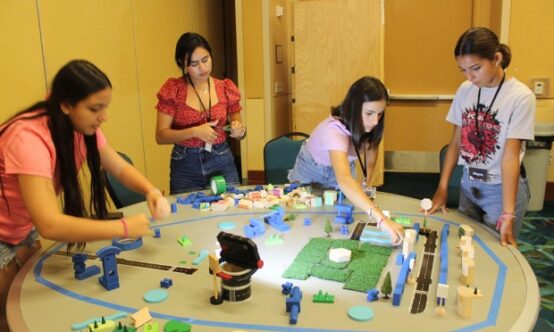
Summit participants collaborate on their park design during the Maker Space activity.
During the Day 1 icebreaker, participants each shared one word that best describes their community.
Summit participants line up along the Community Engagement Spectrum, then discuss their reasons for choosing each spot.
A team presents their community center design crafted in the Maker Space session.
Participants display their finished Maker Space creation.
Summit participants collaborate on their park design during the Maker Space activity.
This team’s Maker Space project features a concession stand focused on healthier food options.

Building a Foundation for Meaningful Youth Engagement 

A central focus of the summit was understanding youth voice and what meaningful youth engagement and empowerment looks like. 

Participants explored Hart’s Ladder of Participation (seen below), which illustrates different levels of youth involvement, ranging from tokenism to shared decision-making and youth-led action. Summit participants reflected on how youth are currently engaged in their communities and identified opportunities for where they could move up the ladder where youth take on more leadership.

Hart's Ladder of Participation showing eight levels of youth participation from tokenism to youth-led decision-making.
Figure 1: Hart’s Ladder of Participation illustrates increasing levels of youth involvement and leadership in decision-making processes, from tokenism to youth-initiated action and shared decision-making with adults. Note. Reproduced from How to engage active participation of minority young people? Hart’s ladder of participation, by European Minority Youth Inclusion, 2016. 

The summit also introduced the Spectrum of Engagement. This framework demonstrates how engagement can progress from informing and consulting community members to involving, collaborating with, and empowering them. Through discussion and reflection, participants considered how organizations can intentionally create opportunities that support deeper youth participation and leadership.

Community Engagement Spectrum with five levels of participation arranged from left to right: Inform, Consult, Involve, Collaborate, and Empower. The spectrum illustrates increasing levels of community participation and shared decision-making, moving from one-way communication toward community leadership and empowerment.
Figure 2. Community Engagement Spectrum. The framework illustrates increasing levels of community participation, beginning with informing and consulting community members and progressing toward involvement, collaboration, and empowerment. Note. Reproduced from the Johns Hopkins Center for Health Security’s community engagement spectrum, adapted from the International Association for Public Participation’s Spectrum of Public Participation.

Together, these frameworks reinforced an important concept: youth are more than program participants. When young people are engaged as partners, advisors, and leaders, communities benefit from their perspectives, creativity, and lived experiences. While these frameworks can guide how we engage youth, they can also empower youth to engage community members, build partnerships, and foster shared ownership of healthier community initiatives. The communities and spaces youth seek to improve belong to everyone.

Understanding How Communities Shape Healthy Choices 

The summit also explored how community environments influence opportunities to make healthier choices. 

Participants were introduced or reintroduced to the Policy, Systems, and Environmental Change (PSE) Framework, an approach that focuses on modifying the environment to make healthier choices practical and available to all community members. Rather than relying solely on individual behavior change, PSE strategies address the broader policies, systems, and environments that make healthier choices easier to make. 

Turning Youth Engagement into Community Action 

Building on the concepts of meaningful engagement and environmental change, participants explored how youth can move from being consulted to becoming active leaders in community projects. 

A key focus of the summit was learning tools that youth (and communities) can use to assess and improve their local food and physical activity environments. Participants explored tools designed to inventory and assess their environments as well as pilot test potential strategies to improve their environments. 

Participants explored various tools that can be utilized to inventory, assess, or improve their food or physical activity environments.
Participants explored Zines as a tool to engage youth.
Participants working on their Zines.
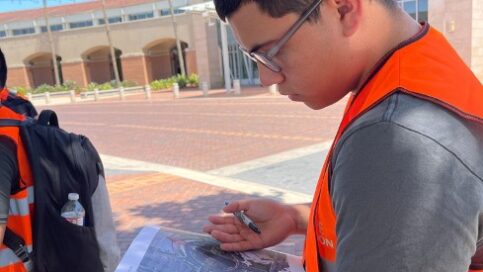
Participants conducted walking audits and then learned more about them during the tools session.
Participants conducted walking audits to assess walkability.
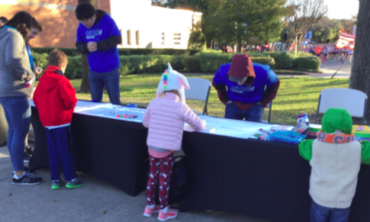
The Activating Environments station featured a StoryWalk and chess.
Healthier concessions efforts add healthier options to the concession stand.
Healthier food policies don’t take away less healthy food; they ensure there is a healthier option for people who want one.
After exploring the tools, participants assessed how easy they would be to use with youth and how impactful they would be with youth in their community.

While exploring these tools, summit participants considered how youth could use tools to: 

  • Identify community assets 
  • Recognize barriers that limit opportunities for healthier communities 
  • Engage community stakeholders in meaningful conversations 
  • Develop recommendations for improving local environments 
  • Support community-driven solutions that promote long-term change 

Together, these tools reinforced a central theme of the summit: when youth are empowered and given meaningful opportunities to lead, they can play a powerful role in shaping healthier communities. 

Looking Ahead 

As summit participants return to their communities, they have practical strategies for elevating youth voices and supporting youth-led efforts that create positive and lasting change. 

Because they completed the 2026 Summit, participants are eligible to apply for WOW-E technical assistance to support a group of youth in using one of the tools they learned at the Summit to support a youth – led healthier community initiative or project. We look forward to seeing youth lead initiatives that support healthier food and physical activity environments. 

References

European Minority Youth Inclusion. (2016, February 5). How to engage active participation of minority young people? Hart’s ladder of participation. WordPress. View source  

Hart, R. A. (1992). Children’s participation: From tokenism to citizenship. UNICEF International Child Development Centre. 

International Association for Public Participation. (2018). IAP2 spectrum of public participation. IAP2. 

Johns Hopkins Center for Health Security. (2023). TRUST checklist priority 2: Develop meaningful & lasting relationships with your community. Johns Hopkins Bloomberg School of Public Health. 

Author’s Note: Artificial intelligence (AI) tools were used to support drafting and editing. The author reviewed all content for accuracy and is responsible for the final text. 
Filed Under: Blog Tagged With: PSE, Summit, Youth

Embracing Youth Perspectives for Community Change

July 26, 2023 by Kailey

By Anna Stehling

Introduction

When planning for community change and improvement, it’s easy to overlook a segment of the population that is often underrepresented among community planners and professionals: youth.

Those under 25 have a unique experience and perspective in their community and often aren’t scared to speak the truth about what they see. If you want to make a change in your community that is impactful, meaningful, relevant, and sustainable, engage the community, including the youth.

FACES OF OUR PAST, PRESENT, AND FUTURE

Changemakers around the world tap into younger generations for their outlook and input. For example, as Kailash Satyarthi campaigned against child labor in India, he made sure to include the children and youth impacted by these situations. For the social reforms he helped bring about, he was co-recipient of the Nobel Peace Prize, along with Malala Yousafzai, in 20141.

His perspective is captured here: “The power of youth is the common wealth for the entire world. The faces of young people are the faces of our past, our present, and our future. No segment in the society can match with the power, idealism, enthusiasm, and courage of the young people.2”

As you look to make a difference in your community, whether large or small, embracing the power of youth perspective can shape your outcomes in positive ways.

MEANINGFUL PERSPECTIVES

Youth participation and engagement are important to a meaningful planning process for myriad reasons. Not only are young people the future of the community, but they are here right now, and their opinions matter. Regardless of age, all people have experiences and opinions that are valid. Youth community members have a right to be included in decisions that will affect them.

Bringing youth to the table and giving them a voice and an opportunity to contribute to change also can foster a sense of ownership and belonging. Young people that are involved in their community change will likely feel a sense of investment in their community and will develop a sense of ownership and pride there as well.

Young people experience and view their community in a way that is unique, which makes them a significant group to tap into. Community leaders should capitalize on the fact that youth have a one-of-a-kind lens through which they view their surroundings.

OBSTACLES TO OVERCOME

Why don’t we embrace the power of the youth perspective more often? Perhaps it’s that community leaders look to professional peers, who are often older. It also takes a concerted effort to engage young people and figure out where to find them. There also might be preconceived ideas about what they care about and how involved they want to be. Keep an open mind–you will probably be surprised.

CONNECTING WITH YOUTH

It can help if you understand a few things about the younger generations by talking to them. Here are some ideas for getting in touch:

  • Reach out to current contacts about the young people in their lives.
  • Connect with local high school guidance counselors and ask for their recommendations about how to interest students in your goals.
  • Utilize social media to reach younger generations (Instagram is a good start).
  • Put up flyers at the places where youth gather, like libraries and community sports venues.

Once you have a handful of young people interested, let them plan a fun event and invite their friends. Pizza, anyone?

PLAN TO SUCCEED

Aiming to increase youth engagement and participation can be woven into your efforts as you work to change your community. Participation might start off small, but incorporating youth in your efforts will likely strengthen it for the future. Think long-term, make use of your connections, and stay optimistic: Your community, young and old, will benefit.


Sources

1 https://en.wikipedia.org/wiki/Kailash_Satyarthi

2 https://www.forbesindia.com/article/thoughts/thoughts-on-being-young/66673/1

Filed Under: Blog Tagged With: Agrilife Extension, blog, wowe, Youth

Texas A&M AgriLife Extension Service
Texas A&M University System Member
  • Compact with Texans
  • Privacy and Security
  • Accessibility Policy
  • State Link Policy
  • Statewide Search
  • Veterans Benefits
  • Military Families
  • Risk, Fraud & Misconduct Hotline
  • Texas Homeland Security
  • Texas Veteran's Portal
  • Equal Opportunity
  • Open Records/Public Information