By: Rebekka Dudensing and Sue Beckwith
Photo from square meals.org
October is Farm to School month. Throughout this month, the U.S. Department of Agriculture (USDA) and, in Texas, the Texas Department of Agriculture (TDA) celebrate the connections between farmers and communities, especially youth. The Farm to School program helps students access healthy, local foods and learn about food production and healthy food choices.
The Farm to School program also helps farmers access an important local market. Schools can provide a good market opportunity for farmers. Some farmers may enjoy the opportunity to interact with students as well. However, working with an institutional market can also challenge farmers to have a consistent and sufficient supply of fresh produce in kid- and cafeteria-friendly formats. Both TDA and the national Farm to School Network offer resources to help farmers decide if serving schools is a good option for their business.
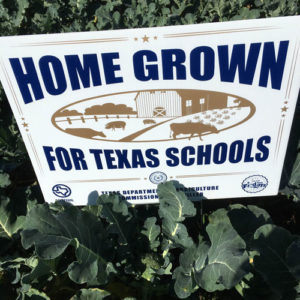
Photo from square meals.org
A 2018 study by the Texas Center for Local Food, Texas A&M AgriLife Extension Service, and Texas State University found that price may be a smaller issue than seasonality, delivery schedules, and product form in serving school markets.
Schools surveyed acknowledged that price was a key concern in purchasing food due to the financial requirements of the school nutrition program. Still, schools surveyed said they were willing to pay slightly more for locally grown produce if they had a reliable source. Texas farms don’t grow popular salad vegetables like tomatoes and carrots through the winter when many youth are in school. School leaders understand that. But some managers need to be convinced that farmers in their area are able to provide a consistent product volume throughout the growing season.
Food managers also try to reduce time and costs by limiting deliveries. Some buyers said they need a single vendor to bring as many products as possible. Farmers may benefit by pooling their product for delivery.
Schools also admitted that they need consumer-ready products, such as chopped broccoli florets and slices carrots. They often lack the staff and facilities to process fresh fruits and vegetables in a raw, whole form. And while staff may not have time to peel carrots, many kids are used to eating baby carrots (which are really larger carrots cut down to a cute, consumer-friendly size). School buyers, were willing to pay more for vegetables processed into more convenient forms, such and diced bell peppers to save labor costs.
Many parts of the state, especially more rural areas, have limited participation in the Farm to School program. Click hereto learn more about joining the Texas Farm Fresh Network.
Links to:
TCLF Study: https://texaslocalfood.org/price-study/
Farm to School Network: http://www.farmtoschool.org
Texas Farm to School Planning: http://www.squaremeals.org/FandNResources/TexasFarmFresh/FarmtoSchool.aspx
Learn more about what your school is doing: https://farmtoschoolcensus.fns.usda.gov/find-your-school-district/texas
 There are three important sectors that will be used to coordinate these efforts: Communication, nutrition/food systems, and physical activity. Communication will help engage, inform, and educate coalition and community members to make healthy living easier by joining listservs and participating in webinars. Coalition members will also write and adopt organizational level healthy nutrition standards in institutions such as hospitals, after-school and recreation programs, health centers, faith-based organizations, food pantries, and early care education. (CDC Implementation Guide) In addition, coalition members will collaborate with partners and subject matter experts to improve the food system and increase access to healthier foods by attending workshops, requesting technical assistance, and acquire tool kits to work in teams and community groups to improve local food systems: distribution, procurements and sales, food hubs and outlets, purchasing collective, innovative practices. Finally, coalition members will learn best practices for organizational and community opportunities to develop active-friendly routes by improving local connectivity and active friendly routes and places through planning, policies, and environmental design. (CDC Implementation Guide)