• Skip to primary navigation
  • Skip to main content
  • Texas A&M Forest Service
  • Texas A&M Veterinary Medical Diagnostics Laboratory
  • Texas A&M AgriLife Extension Service
  • Texas A&M AgriLife Research
  • Texas A&M College of Agrculture and Life Sciences
Working on Wellness Environments
Working on Wellness Environments (WOW-E) is a Texas A&M AgriLife Extension multidisciplinary community development program
  • Menu
  • Home
  • About
    • What is WOW-E
    • Meet the Team
    • Our PSE Approach
    • The HOP Program
    • HOP Counties
  • Stories
    • Blog
    • Videos
    • WOW-E Photo Walks
    • Success Stories
  • Resources
  • Projects
  • Technical Assistance
    • WOW-E Technical Assistance Process
    • WOW-E FY 2026 Technical Assistance Cycle
  • Become a WOW-E Community

Planning to Plan? Here’s Where to Start. 

May 3, 2023 by Kailey

By Emily Gunderson  

Planning is an essential part of any successful endeavor, whether it’s launching a new project or implementing changes within a local, county, or state government. By planning effectively, you can assure the best use of available resources and your fit within larger governmental planning processes. However, before you jump into planning, it’s important to consider the factors that influence change and understand how to work within the already-established framework. 

Knowing that change often occurs through smaller-scale efforts that accumulate to larger movements is essential. You may not see immediate change, but by implementing small changes, you can contribute to a broader change over time. Consider the factors that influence change, like plans, budgets, topography, climate, fiscal resources, expertise, politics, capacity, policies, and public support. You should also consider the capacity of city staff, civic volunteers, and community partners. Understanding these can help you plan more effectively and ensure that your plans are feasible and sustainable. 
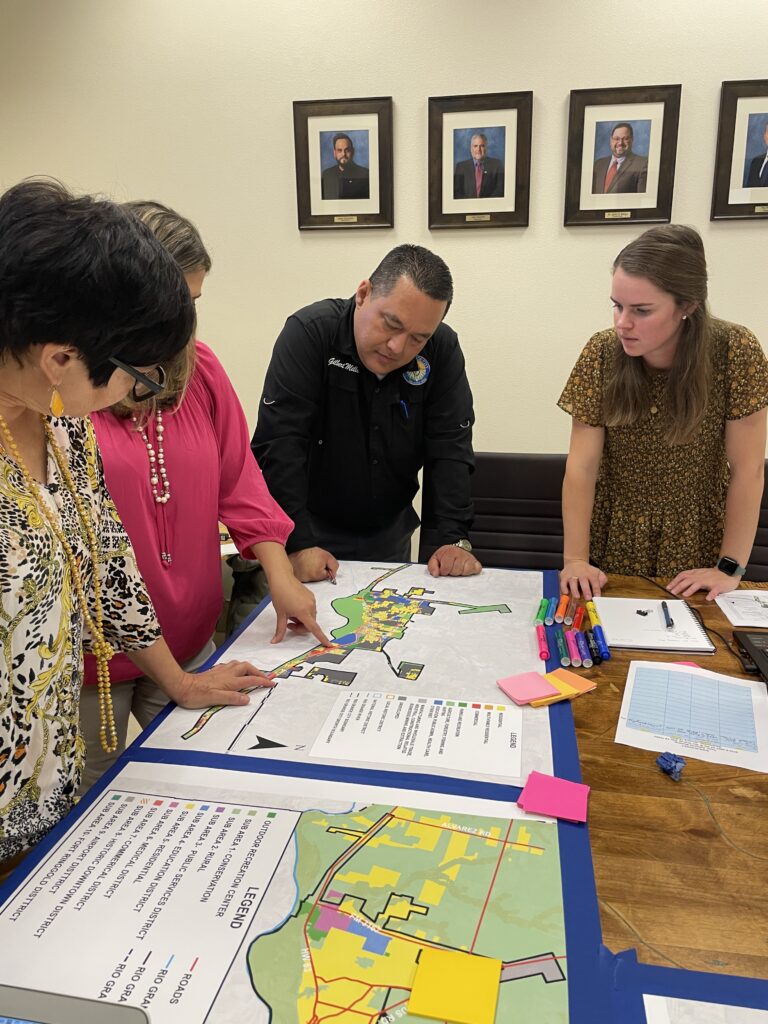
Team Adelante Task Force

For example: over four years ago, WOW-E started supporting the efforts of a health coalition and local citizens who wanted a safer place to walk. Through the technical assistance of WOW-E, that city now has a downtown walkability plan and is in the process of developing a comprehensive plan and parks master plan.  

GETTING STARTED 

When working within the established framework, take time to learn how to work with the existing plans, established priorities, identified issues, and city/county budget. Additionally, understanding the rules and regulations, such as the 72-hour notice, permits, etc., will allow you to avoid any roadblocks that may hinder your plans’ implementation. Don’t forget, planning, policy, and implementation take time, advocacy, and support. It’s essential to be patient and persevere in your efforts to achieve your goals. 
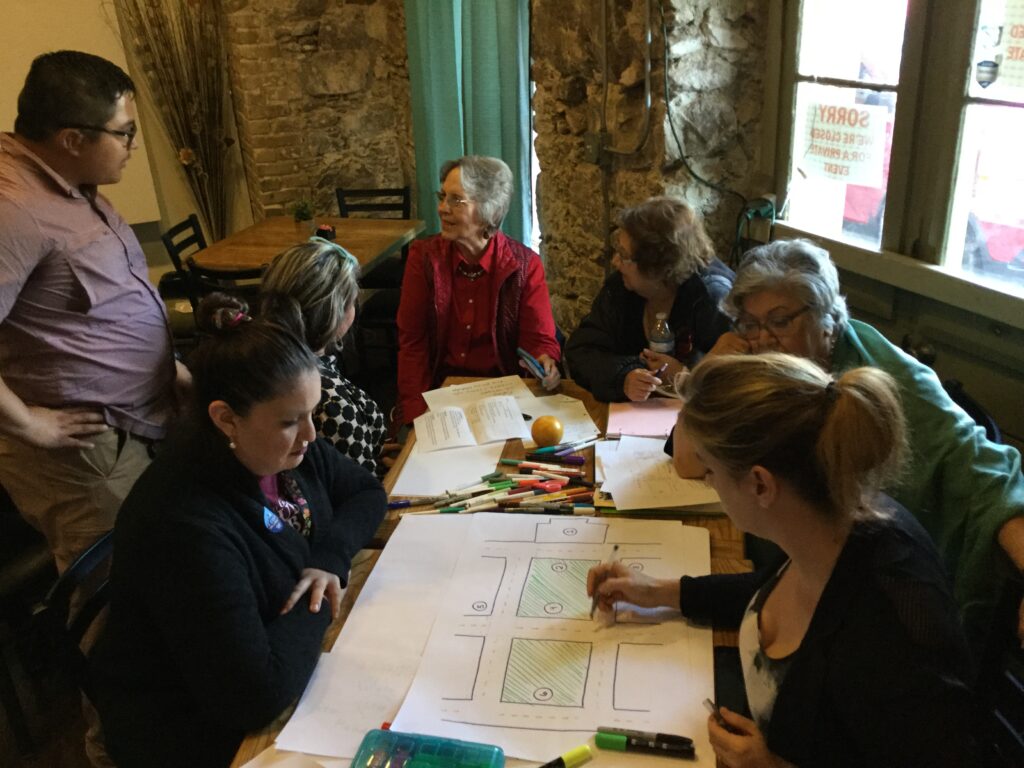
Rio WOW Coalition started the effort towards a comprehensive plan

WOW-E plays a vital role in supporting local communities and governments. They bring a do-with, not do-for mentality. WOW-E links leaders and practitioners to resources within Extension and Texas A&M University, encouraging equitable engagement, education, and empowerment of key partners and organizations.  

For governmental folks looking to build active environments through community planning,  AgriLife Extension can also help build and connect strong community systems to listen to priorities. They can also link people and groups together when they have shared goals, connecting expertise to needs if possible. Another part of their role is empowering and educating constituents to be a part of the process through newsletters, social media, guest speakers, and inviting decision-makers. 
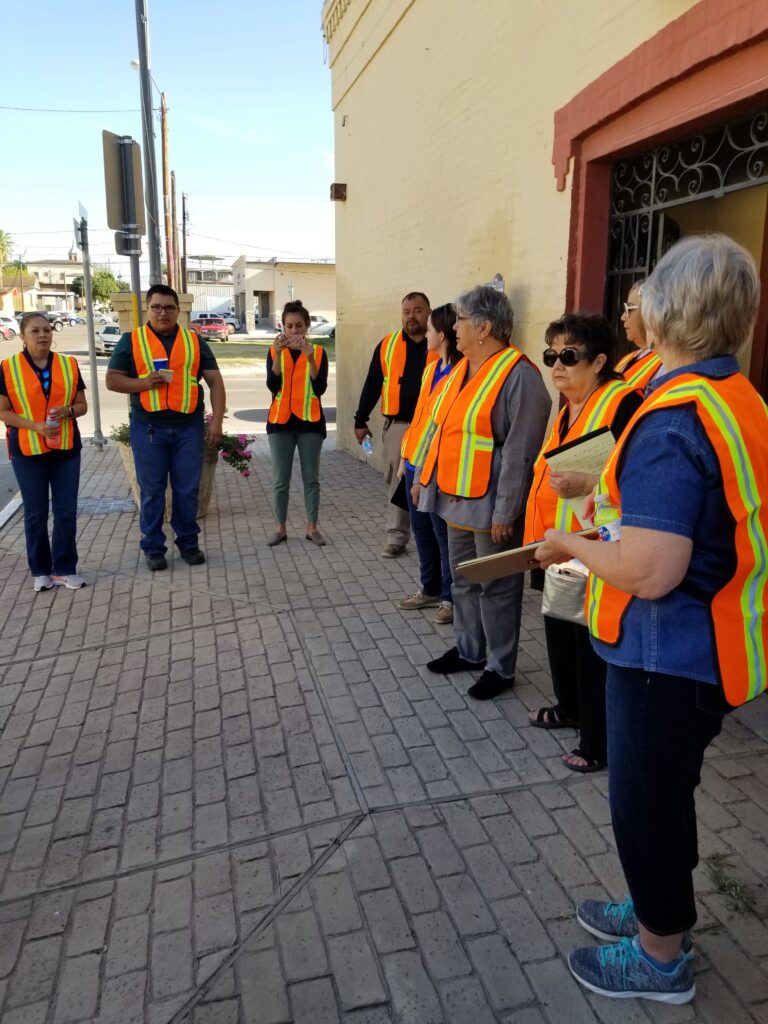
Rio WOW Coalition doing a walkability assessment

CELEBRATE IT ALL 

Celebrating small and big wins helps keep the momentum going over the long haul. That means recognizing change and encouraging stakeholders. Invite people to attend ribbon cuttings or to spread the word about updated and new facilities through an attractive social media post. You could also invite people to help care for new facilities by adopting a park or participating in clean-up days, for example. These are excellent ways to contribute to the community and people feel more invested in the results.  

Remember, planning, policy, and implementation take time, advocacy, and support. Be patient and persevere in your efforts to achieve your goals as you plan for success. 
Filed Under: Blog Tagged With: Agrilife Extension, planning, wowe

Safe Streets and Roads for All (SS4A) Grant Program

April 28, 2023 by Kailey

The Bipartisan Infrastructure Law (BIL) established the new Safe Streets and Roads for All (SS4A) discretionary program with $5 billion in appropriated funds over 5 years. The SS4A program funds regional, local, and Tribal initiatives through grants to prevent roadway deaths and serious injuries.

The SS4A program supports the U.S. Department of Transportation’s National Roadway Safety Strategy and our goal of zero roadway deaths. 

FY23 NOFO Is Open, Now through July 10, 2023

The fiscal year (FY) 2023 Notice of Funding Opportunity (NOFO) for Safe Streets and Roads for All grants is now open through July 10, 2023. 

The deadline for applications is 5:00 p.m. (EDT) Monday, July 10, 2023. Late applications will not be accepted. For details, more information, and applicant guidance:

  • Review the NOFO
  • Visit our How to Apply page
  • Visit our Resources page
  • Review SS4A Frequently Asked Questions
  • Attend a grant application webinar
  • Learn about what’s new in 2023
  • Review the Federal Register notice
  • See the posting on Grants.gov

Award announcements are expected to be made by late 2023.

In FY22, USDOT awarded $800 million in over 500 communities through the first round of SS4A funding. View all of the SS4A 2022 Awards.

Subscribe to email updates to be notified when additional information is available.

To read visit https://www.transportation.gov/grants/SS4A

Filed Under: Blog, grant opportunity Tagged With: grant opportunity, TxDOT

USDA Rural Development Funding Opportunities

April 24, 2023 by Kailey

Funding Opportunities for Infrastructure 

Water & Waste Disposal Loan & Grant Program
U.S. Department of Agriculture
USDA Rural Development offers funding for clean and reliable drinking water systems, sanitary sewage disposal, sanitary solid waste disposal and storm water drainage to households and businesses in eligible rural areas. Application Deadline: Ongoing

Emergency Community Water Assistance Grants
U.S. Department of Agriculture
USDA Rural Development grants for eligible communities to prepare for or recover from an emergency that threatens the availability of safe, reliable drinking water. Application Deadline: Ongoing

Single Family Housing Rural Disaster Home Repair Grants *NEW*
U.S. Department of Agriculture

USDA Rural Development grants to very-low and low-income homeowners to repair homes damaged in a Calendar Year 2022 Presidentially Declared Disaster Area. To determine your eligibility, review the list of Presidentially Declared Disasters by State and County. How do I get started? Contact a USDA home loan specialist in your area. Application Deadline: Open

Housing Preservation Grant Program
U.S. Department of Agriculture
USDA Rural Development provides funding to sponsoring organizations for the repair or rehabilitation of applicable housing. *New* Funding may also be available to help repair homes damaged during a calendar year 2022 Presidentially declared disaster area. Federal Register. Application Deadline: 6/5/2023

Community Connect Grant Program
U.S. Department of Agriculture
USDA Rural Development provides funding to construct broadband networks in rural areas that do not currently have broadband service. Application Deadline: 6/20/2023

Funding Opportunities for Community and Economic Development

SEARCH – Special Evaluation Assistance for Rural Communities and Households
U.S. Department of Agriculture
USDA Rural Development funding for financially distressed rural communities of less than 2,500 people to assist with feasibility studies, design assistance and technical assistance on proposed water and waste disposal projects. Application Deadline: Open

Water and Waste Disposal Pre-development Planning Grants
U.S. Department of Agriculture
USDA Rural Development offers grants to help low-income, rural communities with the initial planning and development of applications for their Water and Waste Disposal loan/grant and loan guarantee programs. Application Deadline: Ongoing

Rural Energy Savings Program 
U.S. Department of Agriculture
USDA Rural Development provides loans to entities that agree to make affordable loans to help consumers implement cost-effective, energy efficiency measures to lower energy bills for rural families and businesses and reduce barriers to investment in energy efficiency projects or activities. Application Deadline: Open

Socially Disadvantaged Groups Grant Program
U.S. Department of Agriculture
USDA Rural Development provides technical assistance for the development of cooperatives or the formation of new cooperatives including leadership training, the development of feasibility studies, business plans and/or strategic plans. Application Deadline: 5/16/2023

Energizing Rural Communities Prize
U.S. Department of Energy
DOE’s Office of Clean Energy Demonstrations offers funding for entrepreneurs, university faculty, student groups, community organizations, tribal and local governments, financial institutions, industry professionals, and others with ideas to help organize or finance a clean energy demonstration project in a rural or remote area. Application Deadline: 5/24/2023

Women in Apprenticeship and Nontraditional Occupations Grant Program
U.S. Department of Labor (DOL)
DOL Employment and Training Administration and Women’s Bureau grant program supports community-based organizations in their efforts to recruit, train, and retain more women in Registered Apprenticeship Programs and industries where they are underrepresented such as construction, manufacturing, and cybersecurity. Application Deadline: 5/29/2023

Environmental Justice Thriving Communities Grantmaking Program
Environmental Protection Agency (EPA)
EPA program supporting the design of a new pass-through program to provide grant funds via subawards to community-based nonprofit organizations and other eligible subrecipient groups representing underserved and disadvantaged communities. Application Deadline: 5/31/2023

Broadband Technical Assistance Program *NEW*
The U.S. Department of Agriculture
USDA Rural Development offers this program to support technical assistance projects such as conducting feasibility studies, completing network designs and developing broadband financial assistance applications. Funding is also available to help organizations access federal resources, and to conduct data collection and reporting. Read the full news release. Application Deadline: 6/20/2023

Filed Under: Blog, grant opportunity Tagged With: grant opportunity, Rural, USDA

Data Sources (Secondary Data) 

April 19, 2023 by Kailey

By Emily Gunderson

Evidence-based planning leads to research-based solutions. In today’s data-driven world, making informed decisions is crucial for both individuals and organizations, like local, state, and federal government organizations. Fortunately, there are multiple resources that can assist with data-gathering that support sound decisions based on research. In this blog post, we will discuss some of the resources available for accessing data that can help with decision-making.  

County & State Open Data Portals 

County and state open data portals are great resources for accessing data about local communities. These portals provide access to a wide range of information, including demographic data, transportation data, economic data, and more. Texas A&M University and the University of Texas libraries have published guides on where to access spatial data. These entities provide tips on navigating the sources and importing large datasets into the GIS applications. It may be valuable to look into multiple sources and various local, state, and federal level agencies. The Texas A&M University guide and the University of Texas guide both provide information on where to find data on GIS applications.  

Texas A&M University Guide: https://tamu.libguides.com/gisdata 
University of Texas Guide: https://guides.lib.utexas.edu/sources-of-geospatial-data/texas-gis-data  

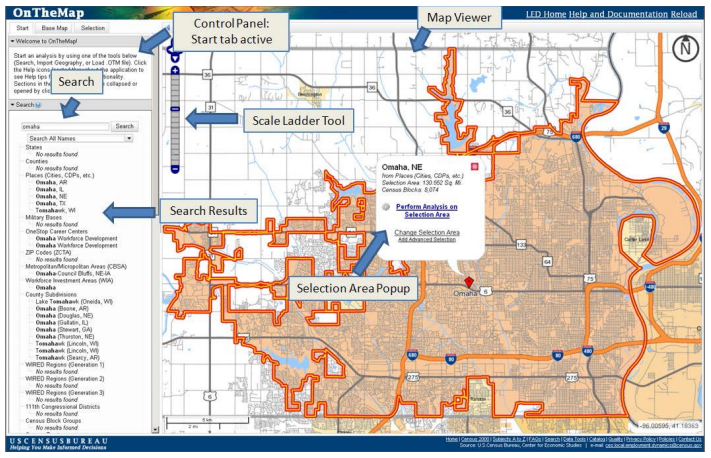
OnTheMap 

OnTheMap is a web-based mapping and reporting application from the US Census Bureau. The application shows where workers are employed and where they live. It also provides companion reports on age, earnings, industry distributions, race, ethnicity, educational attainment, and sex. OnTheMap can be used to measure the inflow/outflow of workers to your city, as well as, answer questions like:  

  • Where do young workers live who are employed in a city? 
  • Where are the workplace destinations for workers living in a particular city? 
  • How do specific employment areas compare in terms of worker origin patterns, worker ages, monthly earnings, and industry-sector employment? How are these areas changing over time and among different demographics? 
  • What percentage of high-wage workers live and work within a city, versus those who commute to a nearby city? 
  • How many workers that earn more than $3,333 a month live along a transit corridor and work downtown or in some other area along the same corridor? 
  • How many potential customers/employees live or work near a candidate site location? 

Getting started with OnTheMap: https://www.oregon.gov/ohcs/data-research/Documents/rental-housing/getting-started-with-onthemap.pdf 
OnTheMap: https://onthemap.ces.census.gov/  

Social Explorer 

Social Explorer is a paid resource that offers a seven-day free trial. The software derives baseline data from the US Census and is used to visualize and interact with data, create maps, charts, reports, and downloads. The site has hundreds of thousands of built-in data indicators related to demography, economy, health, politics, environment, crime, and more. Your own data can also be added to the platform. Social Explorer can be used to turn location data into smarter decisions and better outcomes, analyze and understand the socioeconomic and demographic development of your city, and measure long-term impacts through scenario planning. 

Social Explorer: https://www.socialexplorer.com/  

ArcGIS Business Analyst 

If you already have an Esri account, then look into the ArcGIS Business Analyst product for easy integration. This product helps you make smarter decisions for market planning, site selection, and customer segmentation by combining demographic, business, lifestyle, spending, and census data with map-based analytics. The software helps you identify underperforming markets, pinpoint the right growth sites, find where your target customers live, and share the analysis with infographic reports and dynamic presentations. Pricing depends on your organization’s existing license with Esri. 

Climate and Economic Justice Screening Tool 

The Climate and Economic Justice Screening Tool hosts an interactive digital map. The map highlights disadvantaged census tracts that are overburdened and underserved. Federally Recognized Tribes, including Alaska Native Villages, are also considered disadvantaged communities. This tool is a step in implementing President Biden’s Justice40 Initiative and ensuring that the benefits of Federal programs are reaching communities that are overburdened by pollution and historic underinvestment. The program will identify the percentile the census tract falls within as it relates to climate change, energy, healthy, housing, legacy pollution, transportation, water and wastewater, and workforce development. 

The Trust for Public Land Parkserve  

The platform reports the percentage of residents within a 10-minute walk of a park and breaks it down by demographics. TPL has a mapping application that maps where existing parks are located, where new parks could be built, and gain insight on park equity. 

The Trust for Public Land Parkserve: https://www.tpl.org/parkserve 

Mapping Inequality Project 

The Mapping Inequality Project is another resource that can provide valuable data for decision-making. This project is a collaborative research project that examines the history of redlining in American cities. The project provides access to a wealth of historical data on race, ethnicity, income, and housing that can be used to inform decisions about community development, housing policy, and economic development. 

Mapping Inequality Project: https://dsl.richmond.edu/panorama/redlining/ 

MAPPING ACCESS 

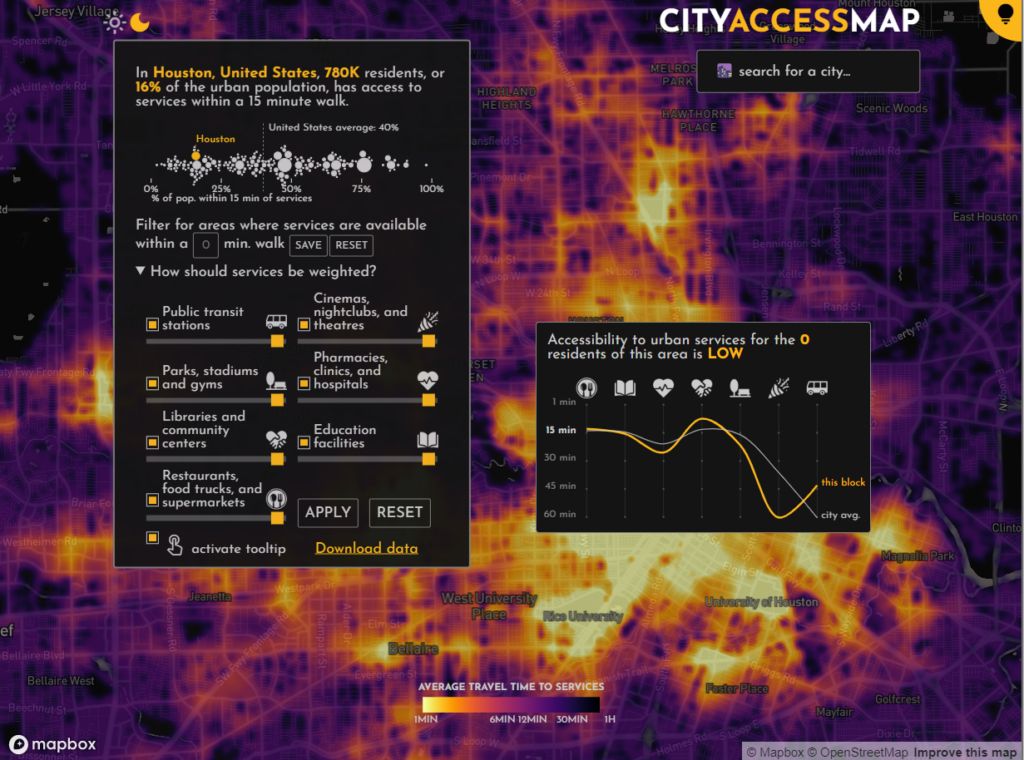
City Access Map 

The City Access Map is an open-source app for global-scale urban accessibility insights. It was developed to provide public administrations, metropolitan authorities, municipalities, NGOs, private organizations, and residents, with the necessary tools to understand which cities are working to provide their residents with services that are accessible within a 15-minute walk vs those that need to invest in public infrastructure to improve access to services for their residents. As of early 2023, it covers (nearly) any urban area with more than 100,000 residents, worldwide, and computes walking accessibility down to the city block level, answering both macro-level and micro-level questions. 

Other resources for locating datasets  

Project Sidewalk: https://scistarter.org/project-sidewalk  
Urban Data Catalog: https://datacatalog.urban.org/search/type/dataset  
Urban & Regional Planning: https://guides.lib.umich.edu/c.php?g=282887&p=1885029 

Filed Under: Blog Tagged With: Data sources, wowe

Spring 2023 Newsletter

March 28, 2023 by Kailey

Spring 2023
Read More

Filed Under: Blog Tagged With: Agrilife Extension, Newsletter, wowe

  • « Go to Previous Page
  • Page 1
  • Interim pages omitted …
  • Page 3
  • Page 4
  • Page 5
  • Page 6
  • Page 7
  • Interim pages omitted …
  • Page 18
  • Go to Next Page »
Texas A&M AgriLife Extension Service
Texas A&M University System Member
  • Compact with Texans
  • Privacy and Security
  • Accessibility Policy
  • State Link Policy
  • Statewide Search
  • Veterans Benefits
  • Military Families
  • Risk, Fraud & Misconduct Hotline
  • Texas Homeland Security
  • Texas Veteran's Portal
  • Equal Opportunity
  • Open Records/Public Information